
From Carve-Out to Global Enterprise: Rebuilding the Operating Backbone of a Global Company
 |
By Troy Randolph |
When people talk about a corporate carve-out, the focus is usually on the transaction itself.
For Envu, separating from Bayer’s Professional Environmental Science division in October 2022 meant something very different: learning to operate as an independent global company almost overnight, while continuing to serve customers across more than 40 countries. The commercial strength, customer relationships, and portfolio came with the business. Much of the operating backbone did not.
Independence meant rebuilding the transactional infrastructure that allows a global company to function day to day: finance, governance, compliance, technology, supply chain, and the regional operating support that was left with Bayer. That work had to happen while customers continued to expect the same high level of service and reliability, regulators expected compliance, and the organization continued to grow. I joined Envu in September 2023, after the initial separation work was already underway. My focus was to complete the buildout and help finalize the transition to operating as a fully independent company. I had previously led finance organizations through transformation in large enterprises and private equity–backed companies, so I understood the mechanics and the steps required to transition a carve-out into a standalone company. What I underestimated was the scale of adjustment required when an entire organization transitions at once — from being an integrated part of a larger enterprise to becoming fully accountable for its own decisions and outcomes, without the support functions many employees had relied on for most of their careers. In a parent organization, many processes exist quietly in the background. Vendor payments, local tax filings, reporting cycles and controls are handled through shared infrastructure. In a standalone company, those same processes become central. They are not administrative details; they are the foundation of credibility. Without that infrastructure, independence is provisional. A company can function for a time, but complexity and risk grow quickly.
The work people don’t see
Customers see product performance, delivery reliability and service continuity. Markets see growth ambition and investment activity. What they don’t see is the machinery underneath those outcomes: the ability to pay suppliers accurately, close the books on time, manage data consistently across regions, and meet regulatory requirements in dozens of jurisdictions.
Rebuilding that infrastructure required recreating capabilities country by country. Regional finance teams had to be established. Local statutory and tax processes had to be rebuilt. Controls and reporting structures had to be designed for a company that no longer sat inside a larger corporate framework or could leverage the broader resources of the corporation.
This is where culture becomes an execution issue. Teams are asked to adopt new ways of working—how expenses are submitted, how inventory is tracked, how data is validated, how controls operate. Those changes succeed only when people understand why they matter and how they connect to the health of the business. In this environment, if you have to ask who owns a task, the answer likely sits with you. Ingenuity and problem solving become necessary skill sets.
ERP as the operating backbone
In any carve-out, one decision shapes nearly every other: how the company will operate day to day. For Envu, that meant establishing a single operating backbone. ERP—Enterprise Resource Planning—is often described as a technology system. In practice, it is the platform that allows a company to run: processing orders, paying suppliers, closing financials, meeting regulatory obligations, and understanding performance across regions. Without it, the ability to optimize operations is impossible. A company can use manual workarounds for a while, but they are not sustainable and will become a roadblock to future growth. Envu implemented ERP early in the carve-out, deploying a system that was different from the one previously used within Bayer. That shift required new processes, training and alignment across the organization. The transition was difficult, and the team faced challenges with shipping and meeting customer needs. This required them to address customer issues in parallel with finalizing the implementation and fixing errors. At times, it felt like changing the tires while the car was moving. Despite the complexity, Envu maintained continuity and continued to grow, strengthening the foundation required to operate independently at scale.
Building while operating
The defining constraint of the Envu transition was continuity. The business could not pause while foundational systems and teams were rebuilt. Customers still needed product. Vendors still needed to be paid. Regulators still expected compliance.
Basic transactional and operational capabilities had to be rebuilt or repaired in parallel with day-to-day execution. Though some temporary solutions were necessary early on, they could not become permanent. There needed to be a clear set of actions and a road map to stable operations.
What mattered most was not speed for its own sake, but quickly building a dependable foundation that could be counted on to provide the data and services needed to run the business. It was critical to regain the trust of the organization by providing the fundamental processes teams had known before the carve-out. At the same time, we worked to build a culture of accountability in which teams were part of the improvements and cross-functional collaboration was essential to resolving issues and strengthening a durable foundation.
Integration as a test of readiness
Growth through acquisition only creates value if the organization is able to absorb it. Integration exposes weaknesses quickly, especially in finance, governance, data, and controls.
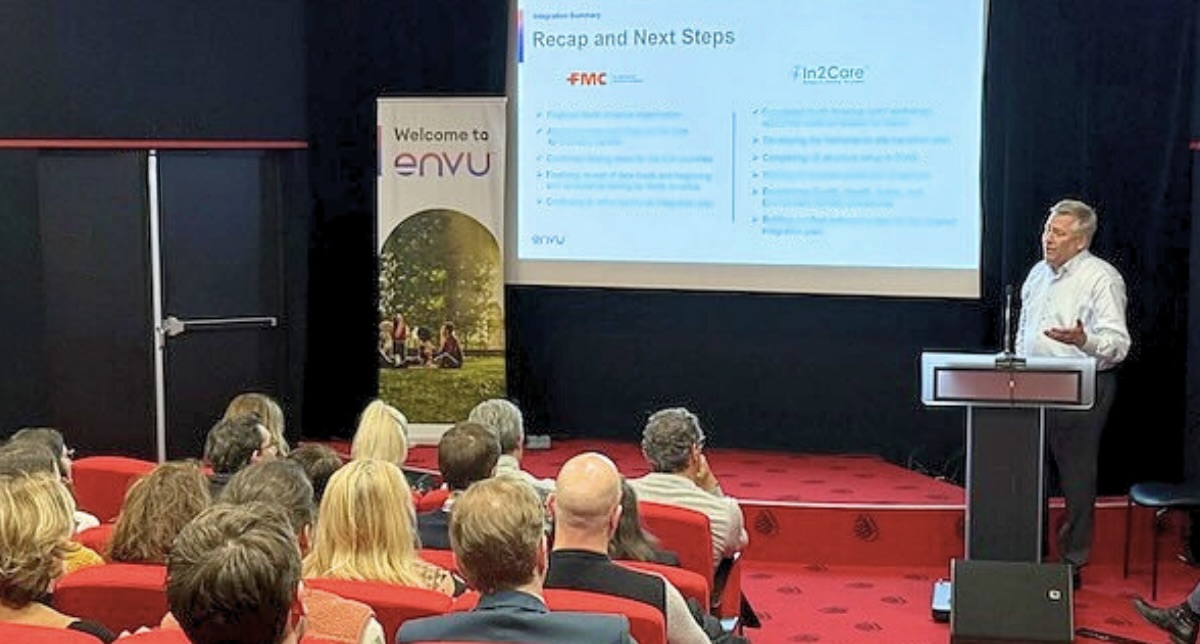
Within its first three years as an independent company, Envu completed three acquisitions: the FMC Global Specialty Solutions (GSS) business, In2Care, and the Actellic® product line from Syngenta. These integrations occurred while the company was still rebuilding its operating foundation.
The objective was not simply to close transactions, but to integrate businesses into a common operating model. Financial systems, controls and reporting expectations were aligned early so acquired operations could function as part of a single enterprise rather than as standalone additions. Where gaps existed, they were addressed directly rather than deferred.
This process continues to evolve. Lessons learned from each M&A transaction have strengthened the approach, with each acquisition building on the last to improve our integration model, from initial diligence to the final steps.
Restraint mattered as much as ambition. The priority has been ensuring that each acquisition strengthens the platform rather than strains it, and that the company is able to realize the growth underlying the investment case.
What defines the transition
A carve-out ultimately reveals whether an organization can stand on its own, beyond the support structures of a larger enterprise. For Envu, rebuilding systems, governance and operating discipline was never about speed or optics. It was about establishing standards that support sustainable operations and provide the platform for responsible growth.
Those standards are now embedded in how the company operates. Envu is stronger because of the challenges it overcame, more resilient because of how it was built, and better positioned to scale operations with the rigor and controls required for sustained growth. The transition from carve-out to global enterprise isn’t defined by a single moment, but by the collective experience of the team in building the foundation for a company that will endure for the long term.


.ashx?w=550)